
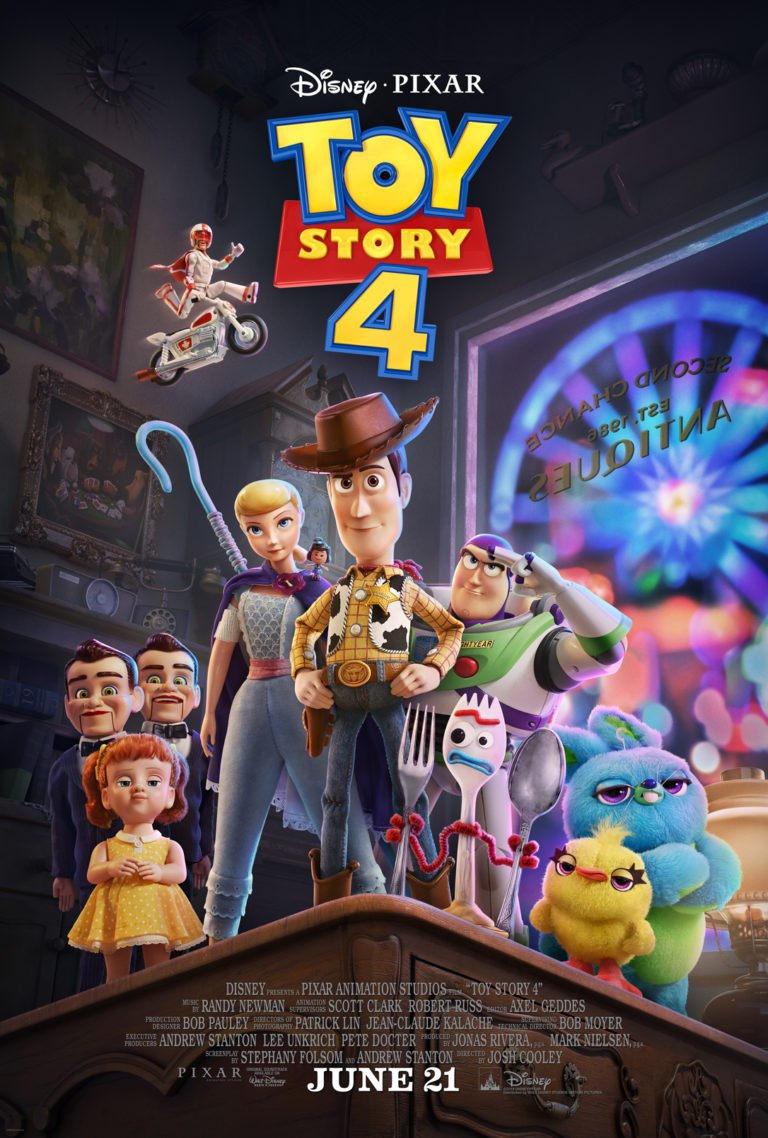
By David Outten CGI (Computer Generated Imagry) has come a very long way in a short time. It really took off in 1993 when Steven Spielberg used it to add some incredibly realistic looking dinosaurs to JURASSIC PARK. Since that time it’s become Hollywood’s addiction. Each of the major studios acts as if they must use more of it to stay ahead of the other studios. It really is incredible. Famous early special effects wizards like Ray Harryhausen would have loved to have it back 1958 when he made THE 7TH VOYAGE OF SINBAD. However, there is such a thing as too much of a good thing. All because you can now make movies with any characters you can imagine doesn’t mean Hollywood should spend the majority of its resources on CGI tentpoles (movies they hope will earn enough to keep their “circus tent” standing). Nor does it mean children need to see every nightmarish creature adults dream up in their fallen souls. Hollywood is a “me too” culture. When a movie does spectacularly well, all the studios try to match what they think generated the success. When THE SOUND OF MUSIC was a spectacular hit for 20th Century Fox in 1965, several big budget roadshow musicals were made. They were shot in 70mm, they had preludes and intermissions, and they had lots of music and big stars. But, they didn’t have the heart or the story of THE SOUND OF MUSIC. Several were absolute financial disasters. STAR, directed by Robert Wise and starring Julie Andrews herself, was about Gertrude Lawrence, a vulgar, selfish Broadway actress who ignored her daughter and was obsessed about her career. It doesn’t take a rocket scientist to see why audiences who loved THE SOUND OF MUSIC said, “No, thank you,” to STAR. Hollywood could be in big trouble if audiences begin to say, “No, thank you,” to more of their tentpole CGI movies. Mark Zoradi, the then president of the Walt Disney Motion Pictures Group, said while giving out the Kairos Prize in 2008, “You can assemble the greatest cast, the greatest crew, go to the most beautiful locations in the world, but as Hollywood has proven more than a few thousand times, if you don’t have a decent script, ya got nothin’.” He could have included, “You can spend $150 million on CGI.” People don’t rush out to buy Blu-ray movies simply because they like higher resolution. They buy movies they like (on Blu-ray). Likewise, where some people may have gone to JURASSIC PARK to marvel (pun intended) at the special effects, few are as impressed by CGI today. A movie comes out practically every week with more CGI than JURASSIC PARK had. Yes, CGI can still get better. Motion capture CGI still looks like an uncomfortable midground between a Pixar animation and reality. The day will come when someone can make a CGI “John Wayne” movie you’d think was made in 1950. Of course, all because something can be done doesn’t mean it should be sone. Frankly though, a new movie with a cast of characters from Hollywood’s graveyards would be preferable to some of the hellish CGI creations giving children nightmares today. Face it, Hollywood now has to compete not only with television, but also YouTube, Facebook, and Netflix. When every Tom, Dick and Harry has a video camera with pixel density approaching Hollywood quality, Hollywood sees CGI as its insurance policy. A home videographer can’t do $150 million worth of CGI. Hollywood likes to make movies even church members in Albany, Georgia can’t afford to make. What shouldn’t be missed, though, is that the real genius of Hollywood is not CGI, it’s the art of storytelling. YouTube productions generally don’t have conflict, jeopardy, three acts, character arcs, and meticulous pacing. As MOVIEGUIDE®’sTed Baehr teaches in his scriptwriting classes, making movies is an art form as demanding as being a concert violinist. Many beginning filmmakers’ movies flop because the filmmakers are not up to “concert” standards. This is a big problem with Christian movies. The truth is, however, many Hollywood movies are not up to Hollywood’s standards. When Robert Wise and Julie Andrews made THE SOUND OF MUSIC, they set an extremely high standard. Few musicals have, or ever will, meet it. In fact, Robert Wise and Julie Andrews themselves failed miserably on their second try. One of the great things about Hollywood is that, when it does set a standard, it sets a high standard. STAR WARS blew all previous sci-fi adventures out of the water. The “me too” filmmakers were forced to try to top it. George Lucas himself had to add a lot more magic to Industrial Light and Magic (ILM), his famed special effects department. It was ILM that did the dinosaurs in JURASSIC PARK. In order to top STAR WARS, Lucas even planted the seeds to the tree that became Pixar. Obviously, Pixar is CGI, but their primary focus is on telling entertaining stories. GCI is their brush, not their heart. TOY STORY was one of Hollywood’s greatest standard setters. It was the first CGI animated feature. It was not a huge hit simply because of its CGI. Like STAR WARS, it was a hit because of its very entertaining story, which was told using exciting new tools. It created a whole genre. In 1968, 2001 A SPACE ODDYSEY was breakthrough science fiction, but it was made with sets and models. The breathtaking 70mm shots of space stations were filmed in what looked like slow motion, and enhanced with the Blue Danube waltz (that scene alone was worth the price of a ticket), but the story was lame. It was popular with pot smokers who thought the ending reminded them of a drug trip. In 1977 STAR WARS had much more spectacular models that whizzed by as mere background to an exciting adventure. The story held you on the edge of your seat while the special effects were like getting an amazing desert free with your delicious meal. 2012’s slate of mega-budget CGI tentpoles are a lot of “me toos.” The survival of the earth will be threatened numerous times by CGI renderings. Major cities will be destroyed, again and again. Marvel superheroes will fight and fight and fight with nasty CGI villains. Bizarre creatures will be friends and foes of humans, and Hollywood will hope boys addicted to video games will still buy tickets. CGI is here to stay. It’s an amazing tool for motion picture artists. But, what really excites audiences are the breakthroughs, not the “me toos.” In 2011 Pixar finally ran into a “me 2” with CARS 2. Previously, it had stunning success after stunning success, in part because each new Pixar movie offered a heartwarming trip into new world of adventure (with the exception of the TOY STORY series). TOY STORY 2 and 3 succeeded because their stories and characters were warm and wonderful. It takes courage and creativity to go beyond “me too.” Every now and then someone in Hollywood musters that courage and creativity. Sadly, much of the rest of the time audiences get “Me Too,” “Me 3,” “Me 4,” and “Me 21.” Hollywood is so preoccupied making “me too” CGI extravaganzas that it fails to serve the people who paid $256 million to see THE BLIND SIDE. What Hollywood needs is a story so entertaining and inspiring that audiences 50 years in the future still want to watch it. By then CGI will be far beyond what can be done today, but a great story will still be a great story and people will still want to be both entertained and inspired. Questions or comments? Please write to us here.
Share:
 - Content: +2