


By Movieguide® Staff
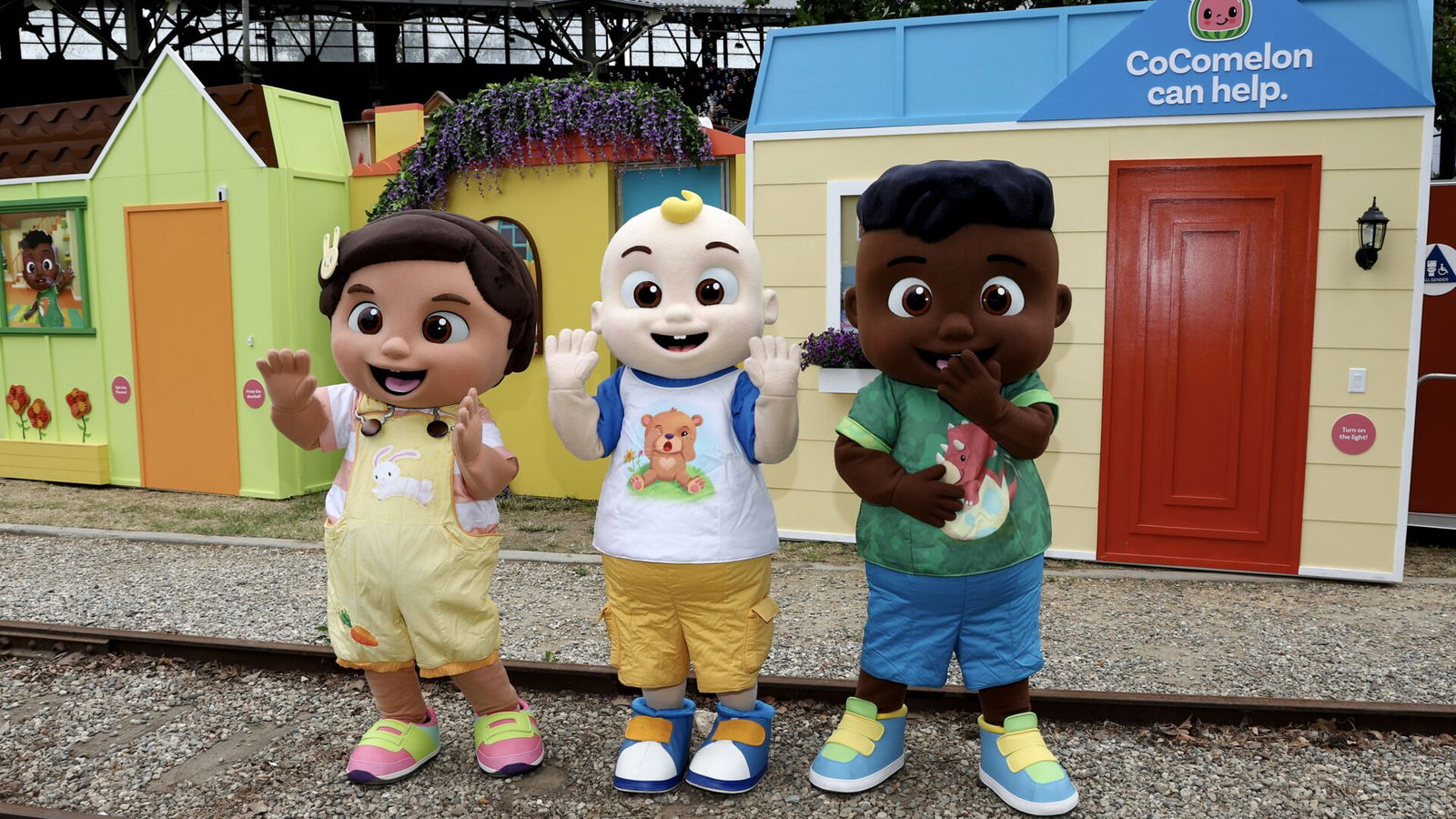
COCOMELON is everywhere — on phones at restaurants, tablets at bedtime, TVs in the waiting room. It is the most-watched children’s show on Netflix, racking up more than 30 billion viewing minutes per year since 2020.
“COCOMELON’s candy-store music, ultra-synthetic animation, and slow bobbing movement spliced by relentless editing is heaven to babies — but the stuff of padded rooms to parents,” writer Jia Tolentino observed in The New Yorker.
That gap — children mesmerized, parents unnerved — has become the center of a real debate among pediatricians and researchers. And the evidence, while still developing, points in one direction.
Psychologist Mark Travers, Ph.D., writing in Forbes, named the problem precisely: “While many parents are rightly vigilant about avoiding kids shows with overtly inappropriate content — such as violence, sexual innuendos or explicit language — there are other subtle, malignant influences within children’s programming. These characteristics, often overlooked or underestimated, impact the developing minds of young viewers.”
The core issue is pace. COCOMELON cuts to a new shot every one to three seconds, a rhythm built for retention, not learning. Each production decision — the bright colors, the constant motion, the relentless music — is optimized to keep eyes on screen as long as possible.
“The rapid succession of stimuli overwhelms the brain’s capacity to process information effectively, resulting in decreased attention spans and difficulties with self-regulation,” Travers explained in Psychology Today. A 2011 study from the American Academy of Pediatrics found that just nine minutes of fast-paced cartoon exposure can diminish preschool-aged children’s executive functioning — the cognitive tools children need to focus, regulate emotion and manage behavior.
Related: Toddler Craze Coming to Theaters: Get Ready for the COCOMELON: THE MOVIE
Dr. Melissa Dvorsky, a psychologist with Children’s National Hospital in Washington, D.C., told WJLA the research is mixed but the concern is real — and it’s not COCOMELON-specific. Fast-paced screen content in general, especially before age two, is the issue.
“There’s been some studies that have shown that when children watch shows like that, like COCOMELON before age 2, when they look at their executive functions later at age 9, they notice that those kids have difficulty with executive functions. However, we don’t really know that that’s causing that yet,” she said.
What is known: the ages between 3 and 5 are critical. “Ages 3 to 5 are critical for children to develop their executive functions. The expectation is that by the time they start kindergarten, they can self-regulate,” Dvorsky said.
“Developing language skills, having interactions with adults, and creative play, all help in growing those executive functions. When they spend too much time in front of the television and not engaging in creative play, it limits the opportunities they have for interactive play,” she added.
The contrast with older children’s programming is instructive. SESAME STREET, shot on a live set with real people, asked children to pay attention to a face and read an expression. COCOMELON asks the brain to keep pace with a firehose. Dvorsky noted the difference comes down to “how stimulating it is on the brain because you’re processing so much information at once” — compared with a real person on set, where “you might be paying more attention to the message and facial expressions.”
Tolentino captured the business logic plainly: “On YouTube, the attention of small children became a seam of glittering gold for content creators to mine.” COCOMELON was not designed with child development in mind. It was designed for watch time.
Movieguide® has raised these concerns before. In July 2024, Movieguide® noted that while COCOMELON’s content carries mostly positive messages, its production methods raise real flags for parents. In March 2025, Movieguide® pointed families toward BLUEY as a healthier alternative — a show with genuine storytelling and a strong moral worldview that earned a Teddy Bear Award® nomination.
The American Academy of Pediatrics recommends no screen time for children under 2 and no more than one hour per day for children ages 2 through 5. These aren’t arbitrary lines. Eighty percent of a child’s brain development happens by age 3, and the habits formed in these years — around attention, language and emotional regulation — don’t vanish when kindergarten starts.
For Christian families, this question carries some extra weight. Children are made for relationship — to learn from faces, to hear their names, to be known. A screen that hijacks that attention without nourishing the soul isn’t neutral. It has a cost. And parents, more than any algorithm, are best positioned to decide what that cost is worth.
Read Next: Is YouTube Worse for Our Children Than TV?
Questions or comments? Please write to us here.
Share:

 - Content: +4
 - Content: +4
 - Content: +2
 - Content: +1