

By Michaela Gordoni
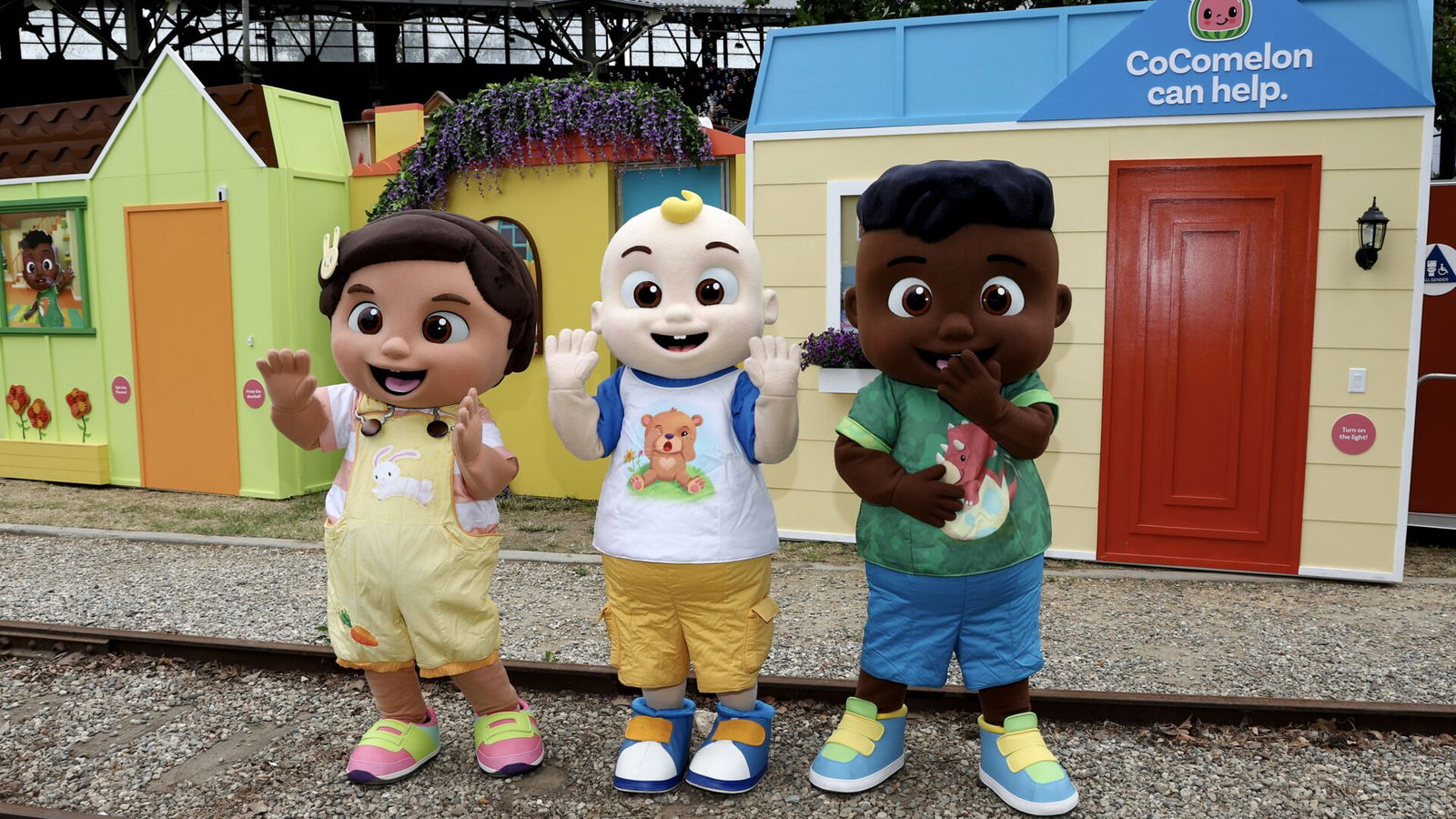
COCOMELON critics have claimed its content is overstimulating and addicting, but the studio behind it, Moonbug Entertainment, says it’s not.
Moonbug recently partnered with UCLA’s Center for Scholars and Storytellers to come up with four learning principles to be applied to its shows like COCOMELON, BLIPPI, LITTLE ANGEL and others.
“Once you dig into the work that we do — which you’re welcome to do — you’ll see our writers care deeply about children’s entertainment,” Rich Hickey, Moonbug’s chief creative officer, told Variety. “A lot of them are caregivers and parents with tiny kids themselves. We can’t do much if there are other opinions that are a little bit noisy, but we think we’re super diligent throughout our process.”
Many parents of toddlers who allow them to watch TV don’t let them watch COCOMELON.
“I’m very relaxed when it comes to TV and screen time – but even I draw the line at COCOMELON,” one parent said. “Both my children were absolutely fixated on it at a really early age – at first it seems like a wonderful gift because it meant I could finally get a few things done. Then you realise that anything that makes a six-month-old glassy eyed and slack jawed probably isn’t good.”
Related: COCOMELON LANE Releases Episode with Boy in a Tutu Dancing for His Gay Fathers
According to Sarah Jefferies, from Paediatric First Aid, COCOMELON’s bright colors, simple shapes, smooth animation and repetitive music appeal to young children.
“The rapid pace of content, the constant visual and auditory stimulation, and the repetitive nature of the episodes can trigger the release of dopamine in the brain – a chemical associated with pleasure and reward,” she said. “This can lead to a cycle where children crave more screen time, potentially leading to overexposure.”
The same concerns go for BLIPPI, which is fast-paced and filled with bright colors. Each episode seems to have its main character, Blippi, going “Hey! Look at this! …Look at me! Whoa, isn’t this cool?” In other words, it lacks substance.
“I can’t help but feel, watching these videos, that BLIPPI is in many ways the direct opposite of MR. ROGERS, because BLIPPI treats kids as if they are stupid and unimaginative,” Current Affairs writer Nathan J. Robinson said.
The four principles Moonbug thinks will make its shows less addicting are “navigating real-life moments, modeling positive relationships, promoting learning through play and telling authentically inclusive stories.”
One of CSS’s gentle suggestions for Moonbug to implement real-life moments is to “minimize distractions and tangential songs or storylines when characters are navigating real-life moments” because “research shows that preschool children are prone to distraction and tangential elements may interfere with their ability to learn lessons.”
Is that a beneficial step? Sure, but to lose the addictive criticism, Moonbug will need to do more than that. It needs to switch from fast-paced to slow-paced scenes, ease up on the vibrant colors and shapes, encourage pauses for real-world interaction and prioritize more meaningful narratives.
Read Next: Is COCOMELON as Safe as it Seems?
Questions or comments? Please write to us here.
Share:

 - Content: +3
 - Content: +1