


By Kayla DeKraker
Kirk Cameron wants us to understand the church history that brought about our religious liberties in America.
“A German monk with a hammer and a set of questions that changed the world in 1517 on Halloween night, October 31,” Cameron said on a recent episode of his “The Kirk Cameron Show” podcast. “Martin Luther — the monk nailed his 95 theses to the church door in Wittenberg, and at the heart of his questions was a simple but explosive question. Who has the final authority? Is it the church? Is it the pope? Is it the king, the government, or is it the word of God?”
Cameron continued, “He was ordered by the authorities to recant his teachings, to apologize, but Luther refused. His famous response has echoed through history. He said, ‘Unless I am convinced by scripture and sound reason, I cannot and will not recant. Here I stand. God help me.’”
Years after Luther, another reformer stepped onto the scene.
“Luther’s ideas crossed from Germany through Europe and then landed in England, and there those ideas captured the heart of a brilliant young scholar named William Tyndale,” Cameron explained. “Tyndale was so important in history because he believed that ordinary people should be able to read God’s word in their own language, and at the time there was no Bible in English for the people to read, so he famously declared that if God spared his life, if God would protect him, that even a plowboy, a farmer, would know more scripture than the priests, the clergy who opposed him.”
Related: Actor Kirk Cameron Reveals the Toughest Lesson He’s Ever Learned
After Tyndale was martyred for his beliefs, John Calvin and a group of exiles who fled to Geneva during Queen Mary I’s reign were inspired to create another Bible translation.
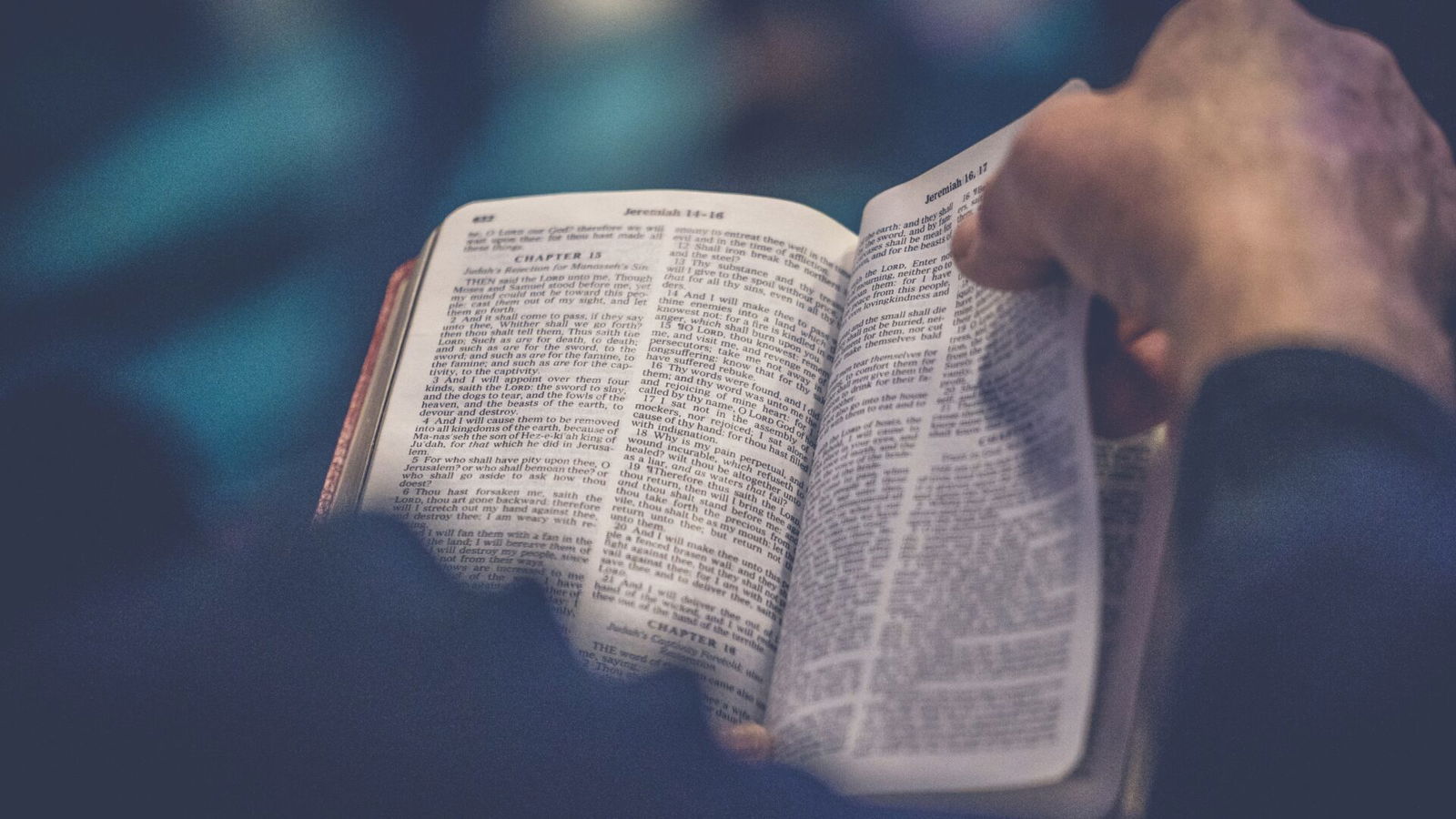
Cameron explained, “They produced what became known as the Geneva Bible in 1560. Remember, the King James is going to come later in 1611, I believe, and what made this Geneva Bible so unique wasn’t only the translation; it included study notes in the margins that helped ordinary people understand both scripture and its implications for everyday life, like what does this mean for us as everyday people.”
“Its production heralded one of the first mass-produced English Bibles, deeply influenced by the Reformation spirit of making Scripture available for personal study and devotion,” Bible Hub said.
The rulers of the time “hated” the study notes the translation included for one reason.
“It said all human authority is derived from God and is accountable to God,” Cameron said.
Because King James feared what the notes in the Geneva Bible would teach people, he created the King James Bible, which was essentially the same Bible but without the notes. However, the Geneva Bible traveled with the Pilgrims to America.
“The ideas that they had in their hearts and that they carried in their minds were deeply shaped by the Geneva Bible — the conviction that your rights come from God, not from government, that governments exist under God’s authority and are accountable to Him,” Cameron explained. “That your conscience cannot be controlled by the government, and that no king, queen or government party is above God’s law. They will answer to Him as well.”
Romans 13:1 says, “Let everyone be subject to the governing authorities, for there is no authority except that which God has established. The authorities that exist have been established by God.”
This verse emphasizes the truth that King James feared — that God ultimately rules over the world.
Read Next: Candace Cameron Bure and Kirk Cameron Discuss The Difference Between Joy and Happiness
Questions or comments? Please write to us here.
Share:
 - Content: +3
 - Content: +2
 - Content: +4
 - Content: +4