


"A Delicious Debut Brings Lessons to Children"


| None | Light | Moderate | Heavy | |
|---|---|---|---|---|
| Language | ||||
| Violence | ||||
| Sex | ||||
| Nudity |
What You Need To Know:
PHOEBE & JAY is cute, entertaining, unique, and well made. The voice acting and characters feel natural, unique and have a special energy to them. If anything, the adventures are a little simplistic, but they are delightful and engaging. The first three episodes of PHOEBE & JAY have a strong moral, pro-family worldview. They promote loving your neighbor, honoring your parents and grandmother, kindness, generosity, accountability, and helping others learn things.
Content:
More Detail:
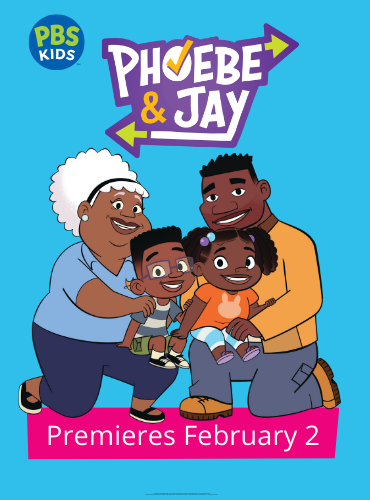
Often, some of the best and most underrated children’s TV programs shows come from PBS kids, and the newest addition to the lineup is a culturally unique take on children’s education. PHOEBE & JAY is more than a pun on the classic sandwich. It’s also a great program to help children learn a variety of lessons with a triple focus on morality, practical life lessons and community outreach.
The program follows twin African American children Phoebe and Jay Yarber along with their widowed father and Grandma Annie and their adventures in their new home, an apartment complex called the Tobsy Towers. Phoebe is a creative and musically inclined child, whereas Jay is a bit more story focused and activity driven. It’s heavily implied that Grandma and Father actually also work at the tower, and the two children have adventures spending time learning lessons and meeting their neighbors.
Each episode of PHOEBE & JAY is divided into two 11-minute cartoon segments. In between the two segments are short live action segments of a boy or girl with an adult doing things like going shopping for clothes at a thrift shop or mailing a Valentine’s Day letter to their grandma. MOVIEGUIDE® reviewed the first three episodes, or the first six cartoon segments.
The first cartoon segment, “Paint on the Mail,” has the family delivering packages to people in the complex after the twins accidentally spill paint on the addresses. The second cartoon, “The Last Box,” has the twins opening the last box from their move where they find a memento from their late mother in the form of her bedazzled jacket, and the twins decide to clean it so Phoebe can wear it. The third cartoon, titled “Bird Sitting,” sees the twins agreeing to bird sit for their neighbor, Miss Jane’s, bird, Houdini, but they have trouble when they don’t follow the instructions Houdini needs for his bedtime in the right order. In the fourth cartoon, “The Green Pepper,” the twins are given a task of taking care of a bell pepper in the community garden for two days. The fifth cartoon, “Birthday Dance Surprise,” has Phoebe teaching Jay, their father, and their friend, Lupe, a special dance for Grandma’s birthday. Finally, the sixth cartoon, “Jay’s Fit,” has the twins trying to replace Jay’s nice outfit that he got muddy before their family photo.
PHOEBE & JAY is one of the most unique children’s programs showing how to live in a community that’s been aired for a long time. First off, it takes place in a large apartment complex, which means the neighboring variety is fairly interesting. In addition, the community seems to be one of the most central themes for the show. In the first cartoon segment, the children are introduced to several neighbors, a girl named Lupe and her mother, an older adult woman named Miss Jean and her bird Houdini, and the grandfatherly Mr. Gurley. Each neighbor quickly befriends the family, and the segment shows that friendships can transcend generations, especially with the twins wanting to befriend Mr. Gurley, a friendly elderly bachelor who loves to spend time with the children. In “The Green Pepper,” viewers are shown how a community garden works and its role in various apartment complexes and neighborhoods, sharing excess vegetables with neighbors while still maintaining ownership of their labors. Finally, in the cartoon, “Jay’s Fit,” the children and viewers are introduced to their local “pass it on table,” sort of like a local charity boutique designed to give clothes to neighbors that people have outgrown or don’t need so that people who do need them have access to them for free. All these are to show both the main characters and children how to interact with their neighbors and be a positive influence on their community as a whole.
Community outreach is not the only major theme of lessons to be learned in this show. In each cartoon, there is a heavy focus on learning practical life skills. In the first cartoon, the kids learn about how to properly do laundry to help take care of their mother’s memento jacket. In the second cartoon, the children are taught how to read an address as well as how to navigate their apartment building. In the third cartoon, the children learn how to follow instructions in proper order and how to take care of a pet. The fourth cartoon teaches the children how to garden and how to read a moisture meter. The fifth cartoon has a focus on how to read diagrams and how to teach new skills to others who learn differently. In the sixth cartoon, the children learn how to read clothing sizes and how a donation center works. In addition to all these specific focused lessons, the twins often look for creative solutions to problems encouraging critical thinking. For example, in “The Green Pepper,” Jay uses an umbrella meant to provide shade for people sitting outside in the sun to keep the pepper’s soil from getting too wet when it suddenly rains. Some of the skills the children learn or apply are also associated with practicing or employing their reading skills. Whatever the skill, however, the episodes focus on such things in a fun and unique way that’s pleasing and entertaining.
PHOEBE & JAY has a strong moral, pro-family worldview. The title characters learn to love their neighbors and honor their parents and grandmother. Every cartoon segment has an important moral lesson to it, even if the lesson doesn’t seem to be the focus of the show. In the first cartoon, there’s a heavy focus on patience with Phoebe having very little and her father informing her, “Sometimes you gotta wait for something great.” This gets repeated in the cartoon “The Green Pepper.” In addition to patience, the family learns to honor and grieve for their dead mother and to keep loving their family. “Paint on the Mail,” has the children learn accountability for mistakes and how to make up for such mistakes, along with being kind to their neighbors. In “The Green Pepper,” the lesson of patience is reapplied to gardening, Also, Grandma comes to admit that no matter how old you are you can still learn something new and anyone can teach a lesson, in this case being kind to the mischievous squirrel. “Birthday Dance Surprise” has the children and the community doing something kind and generous for Grandma Annie’s birthday, showing family-centric love. Finally, in “Jay’s Fit,” the theme of generosity for others and accountability for mistakes is heavily shown in Jay as he tries to fix his messed up muddy outfit.
The first three episodes of PHOEBE & JAY have no objectionable content. There’s some light violence. For example, Grandma Annie chases off a squirrel she thinks is trying to eat the pepper she’s growing in the community garden. Also, a bird knocks some books off the shelf when it frantically flies around an apartment. In addition, three incidents involve light but ambiguous references to divine intervention. For example, a purple light shines when a wind returns the late mother’s special jacket to her daughter, Phoebe, and a purple light shines on a box where her brother, Jay, can find a shirt to replace the shirt he got muddy.
All in all, PHOEBE & JAY is a very cute children’s show with a positive moral worldview.
Share:
 - Content: +2
 - Content: +1
 - Content: +4
 - Content: +2