

By Tom Snyder
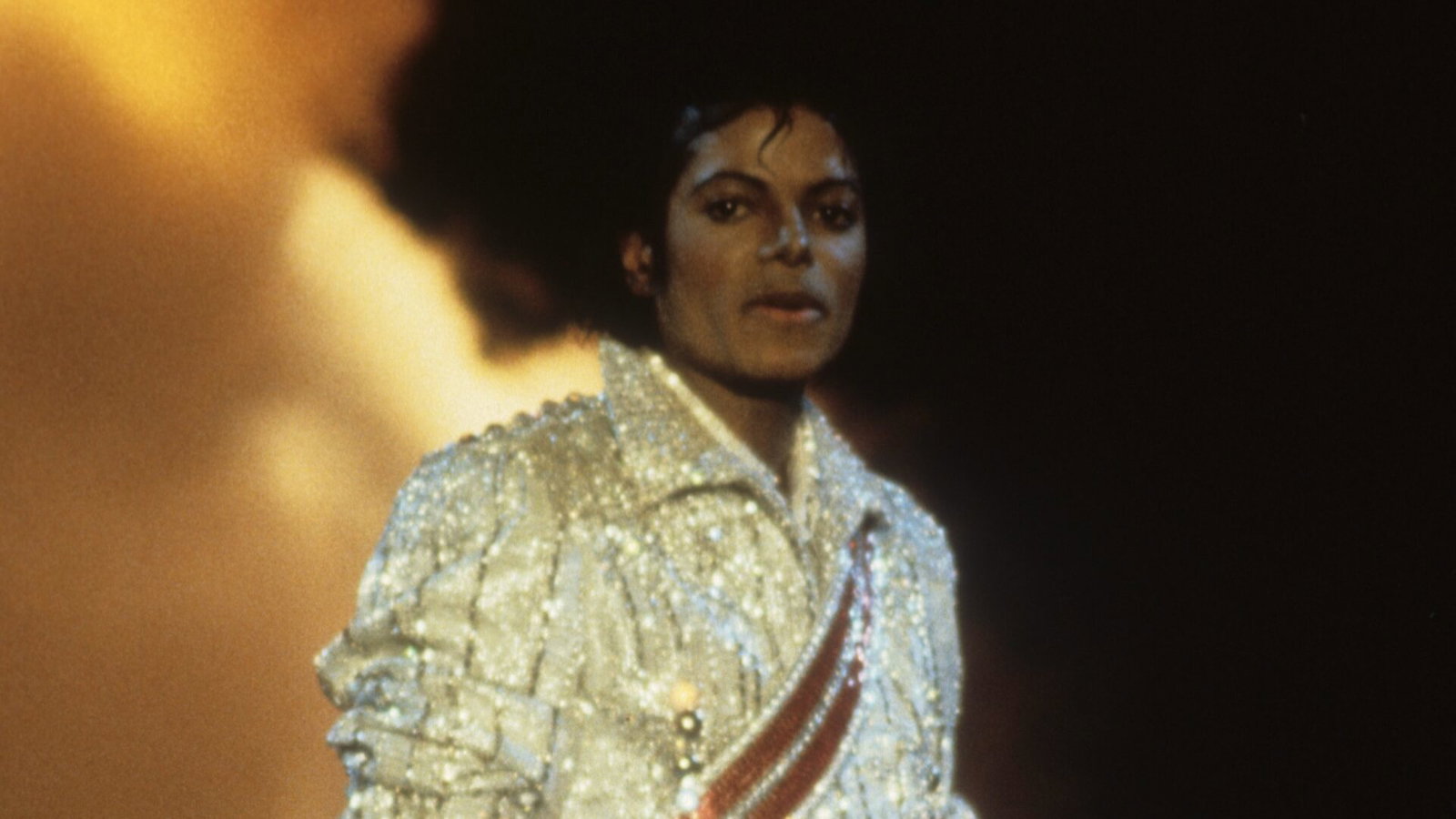
April 23, 2026: This week, Hollywood releases a movie, titled MICHAEL, about Michael Jackson, the singer and composer who became the biggest star of the 1980s and was known as “The King of Pop.” Earlier this year, Hollywood released a documentary movie with Las Vegas concert footage of “The King of Rock,” Elvis Presley. That movie was called EPiC: ELVIS PRESLEY IN CONCERT.
Ironically, and sadly, both men became troubled figures in their middle age, with both dying of drug overdoses. Thus, Elvis died at only 42 and Michael died at 50.
This similarity between these two giant icons of pop culture clearly shows the immense pitfalls of fame, especially if you spend much of your time seeking fame, as both Elvis and Michael seemed to do.
However, despite their similar notorious and tragic ends, there’s one big difference between the two men, and between both of these two movies, that’s worth noting.
In MICHAEL, Michael Jackson shows a concern for other people and social issues, especially the plague of gang violence in the 1980s and the plight of young children with serious and even terminal medical problems. For example, MICHAEL shows the King of Pop visiting sick children in hospitals. Also, after Michael suffers serious burns on his head during a music video rehearsal that went awry, he visits the children who were also at the burn unit that took care of him and gives the burn unit millions of dollars in profits from a concert tour.
As a famous celebrity, Michael Jackson set new standards for celebrities in terms of donating money to causes serving needy people. However, the movie MICHAEL presents no theological or spiritual foundation for these concerns of Michael, even though his mother converted to the heretical non-Christian cult Jehovah’s Witnesses and regularly took her children to the JW Kingdom Hall.
According to a 2025 magazine article, Michael’s mother, Katherine, became disillusioned with her Baptist, Lutheran upbringing after finding out some married pastors were committing adultery and joined the Jehovah’s Witnesses. The movie doesn’t mention any of these facts, however. It also doesn’t mention that in 1987, Michael Jackson broke away from the cult but often claimed in interviews that he still regularly read the Bible and often prayed to God. In fact, according to that article, Michael gave interviews to Oprah Winfrey and Geraldo Rivera in 1993 and 2005, respectively, where he said his concern for children’s welfare grew out of his commitment to Jesus Christ’s teachings about children and about being like a child. “I’m trying to imitate Jesus,” he told Winfrey, “in the fact that he said to be like children, to love children, to be as pure as children, to make yourself as innocent and to see the world through eyes of wonderment and the whole magical quality of it all.” Also, when Geraldo asked him in 2005 about what motivated is humanitarian charity, he replied, “Jesus said bring on the children, imitate children. . . . We were raised with those values.” The movie MICHAEL doesn’t mention any of that either.
However, in a March 8, 2022, interview with MJJCommunity, a Michael Jackson fan cub, Michael’s brother, Jermaine, says he wrote in his own book, YOU ARE NOT ALONE: MICHAEL: THROUGH A BROTHER’S EYES, that, during his 2005 criminal trial for child molestation, where Michael eventually was declared not guilty, Michael returned to the Kingdom Hall to pray, adding, “It’s fair to say that he died a Jehovah’s Witness.”
In contrast to this, the Las Vegas concert movie about Elvis Presley, EPiC, mentions Elvis Presley’s more orthodox Christian faith throughout his life and shows him performing the gospel songs “How Great Thou Art,” “There’ll Be Peace in the Valley for Me” and “O Happy Day.” It’s interesting to note that “Peace in the Valley” was the last song Presley sang on his final appearance on the ED SULLIVAN SHOW on Jan. 6, 1957, and he sang it for his mother. In addition, one of the biggest hits Elvis had in the 1960s was his version of the 1953 gospel song “Crying in the Chapel,” which was released on April 6, 1965. In fact, “Crying in the Chapel” was Presley’s first million-seller since “Return to Sender,” released in 1962. Also, Presley’s three Grammy Awards were all for gospel projects.
Thus, while there are definitely religious and even biblical references or allusions in a few of Michael Jackson’s songs (for example a reference to 40 days and 40 nights in the song “Billie Jean,” which is a reference to Jesus being tempted by Satan in the desert for 40 days and nights), Michael Jackson, unlike Elvis Presley, never published a gospel recording or sang a gospel song at his public concerts, despite his cultic Jehovah Witness upbringing.
Therefore, there was no public foundation on Jesus Christ and Christianity in Michael Jackson’s musical career or in his social/moral concerns, but there was such a foundation in Elvis Presley’s life and career.
That said, however, both men spent a lot of their time writing and singing love songs. Sadly, most of those love songs were divorced from any biblical foundation.
The Bible, however, relates all romance to the idea of holy matrimony, or marriage. As Jesus says in Matthew 19:1-12, quoting Genesis 2:24, “A man shall leave his father and mother and be united to his wife, and the two will become one flesh.”
Thus, the purpose of romantic love according to Jesus and the Bible is marriage and procreation. Furthermore, Paul tells wives and husbands in Chapter 7 of First Corinthians to “yield,” or submit, themselves to one another. Then, in Chapter 6 of Ephesians, he also orders husbands to love their wives like Jesus loved His church and wives to respect their husbands. Perhaps, the Spirit of God in Paul knew that men have problems loving their wives while women have problems respecting their husbands?
Whatever the answer is to that question, however, it is certainly better to have the Christian, biblical foundation of Elvis Presley’s musical career and life rather than the cultic, unbiblical foundation of Michael Jackson’s. It’s also better, though, to put romantic love into a context that honors biblical, sacred love and marriage. In that light, we also perhaps would do better, then, to remind ourselves of two great romantic Beach Boys hits, “God Only Knows,” one of the greatest love songs ever written that gives a divine foundation to a man’s boundless love for a woman, and “Wouldn’t It Be Nice,” another great love song where the singer suggests to his lover they should pray about getting married where they can be happy together the whole day long.
Questions or comments? Please write to us here.

 – Content: +1
Share:

 – Content: +1