

 Add Movieguide® as preferred on Google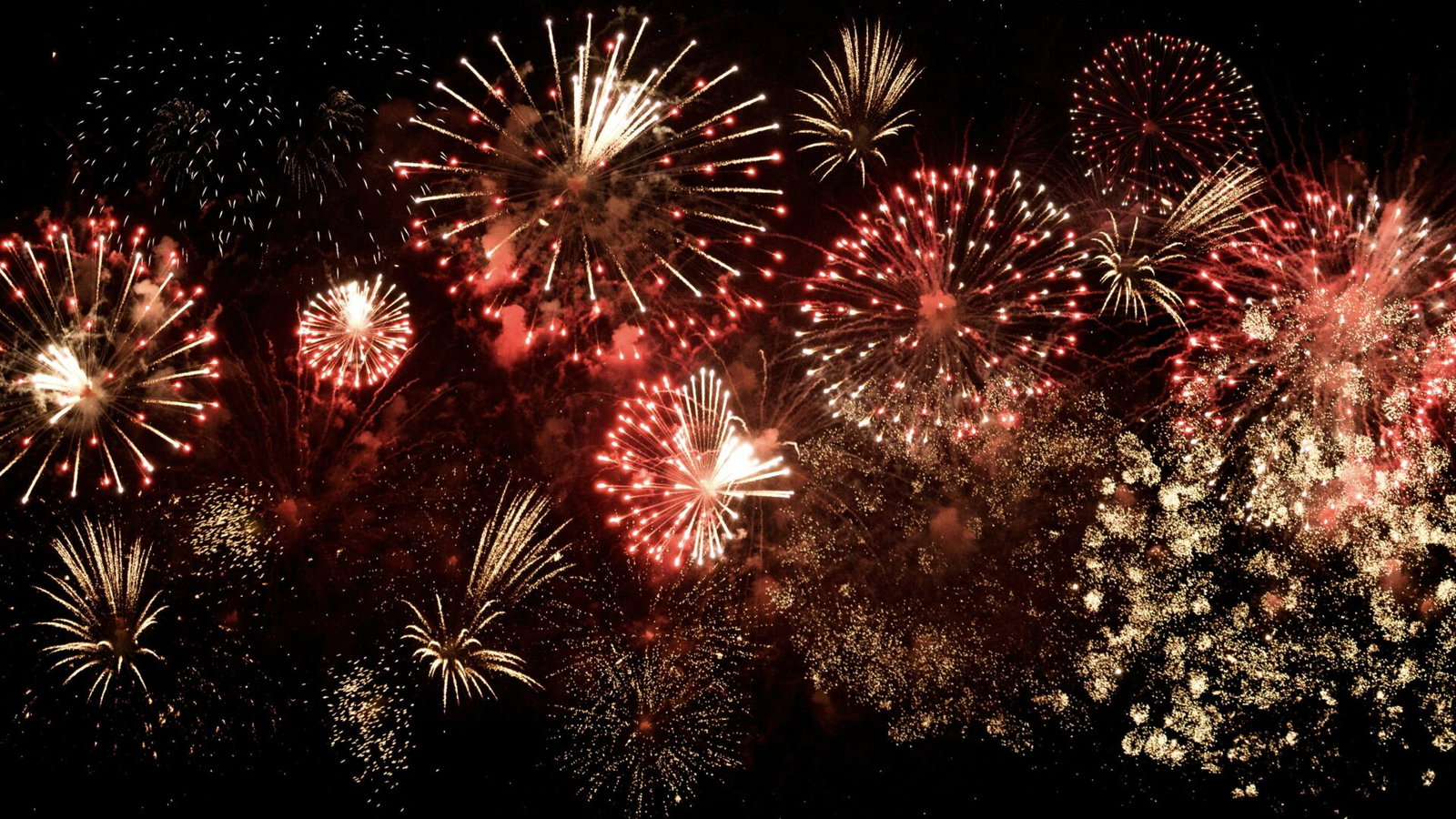
By Movieguide® Staff
America turns 250 this week, and if history is any guide, the party says as much about the moment as it does about the milestone.
“We’re, quote-unquote, ‘celebrating’ in the aftermath of impeachment proceedings, in the aftermath of major Supreme Court decisions about executive authority and presidential leadership,” Marc Stein, a history professor at San Francisco State University and author of BICENTENNIAL: A REVOLUTIONARY HISTORY OF THE 1970S, told NPR. “Again, quote-unquote, ‘celebrating’ in the midst of international conflict, energy and economic crises.”
Stein was talking about 1976, but he sees “eerie parallels” to today. This year’s semiquincentennial arrives amid economic jitters, overseas conflict and a political climate tense enough to curdle a backyard barbecue.
President Trump has leaned into the anniversary with his own construction projects and a hand-picked planning committee that sidestepped an existing bipartisan one, drawing accusations of turning a shared national moment into a partisan one. Washington, D.C., is hosting a record-chasing fireworks show and a state fair critics call more culture-war than county fair, while 16 U.S. cities are riding a genuinely unifying wave: the World Cup.
None of this is new. NPR asked historians how the country handled its 50th, 100th and 150th birthdays, and the pattern holds: big anniversaries rarely escape the baggage of their era.
Related: REAGAN Will Get a Rerelease for America’s 250th Birthday
The 50th, in 1826, unfolded with an odd kind of grace. A handful of Revolutionary-era survivors, including Thomas Jefferson and John Adams, were still alive that year, and towns across the country toasted them with parades and dinners. Then, unbeknownst to the revelers that evening, Jefferson and Adams died within hours of each other, both on the Fourth of July.
“It was regarded not only as a mathematical improbability, but as a sign of providence that God had, in a way, symbolically blessed the United States by taking on a journey to heaven two of the three surviving signers of the Declaration,” said Andrew Burstein, a professor emeritus of history at Louisiana State University.
The 100th, in 1876, went bigger. Philadelphia hosted America’s first World’s Fair, pulling in nearly 10 million visitors, roughly a fifth of the country’s entire population, to gawk at the telephone, the typewriter and their first taste of popcorn and Heinz ketchup. It came with blind spots, too: Southern states boycotted over lingering Reconstruction resentments, and organizers invited Frederick Douglass only to sit onstage, not to speak.
“After 1876, as Americans got further and further away from the founding, the founding kind of hardened into myth,” said Fergus Bordewich, a historian and author of CENTENNIAL, who studies the fair.
The 150th, in 1926, cratered. Corrupt Philadelphia politicians moved the sesquicentennial fair to a swamp, blew the budget filling it with dirt and opened it half-built into one of the rainiest summers on record. Variety magazine famously dubbed it “America’s Greatest Flop.”
“This really points to what happens when what is meant to be a national civic celebration gets kidnapped by a small cadre of individuals who use it purely for their own gain, with no thought about the public welfare or the public good,” said Thomas H. Keels, a Philadelphia-based historian, drawing a straight line to today’s fights over the 250th.
There’s something worth sitting with here for families trying to make sense of this summer’s noise. The nation’s birthday has never been immune to ego, corruption or bad timing, and yet, as 1826 quietly shows, grace has a way of turning up in the middle of the mess anyway. Bordewich argues what’s missing this round isn’t fireworks or spectacle but a “reinvestment in civic education,” a rediscovery of what actually makes the American experiment worth celebrating. That’s a job for kitchen tables, not just planning committees, and maybe the best use of a birthday like this one.
Read Next: This New Dr. Seuss Book Is Perfect for America’s 250th Anniversary
Questions or comments? Please write to us here.
Add Movieguide® as preferred on GoogleShare:
 - Content: +3
 - Content: +1
 - Content: +1
 - Content: +2