

By Michaela Gordoni
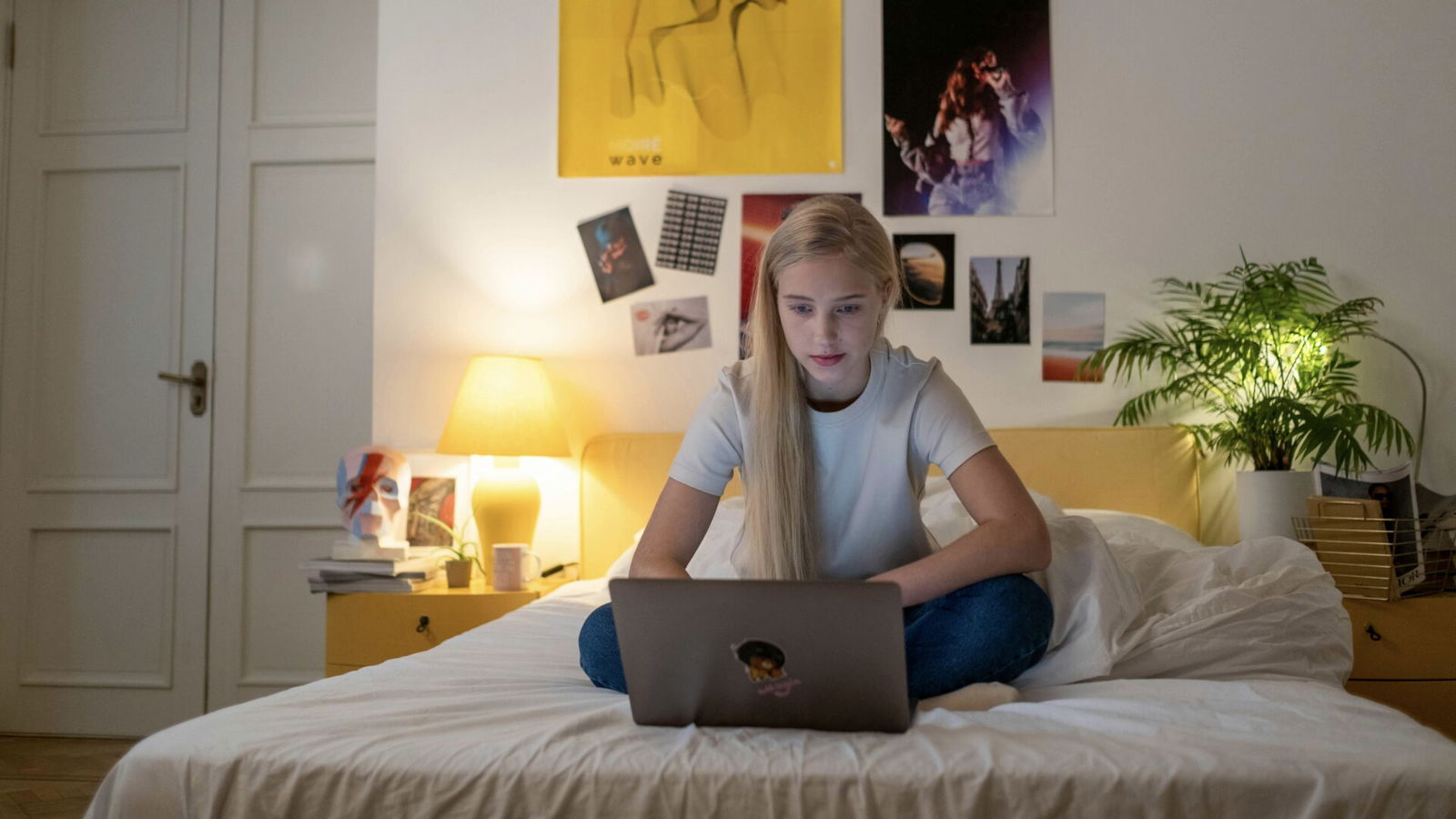
Nearly 100% of teens have smartphone access, and fear of missing out drives their constant connectivity.
Online safety company, Bark, says social acceptance activates reward centers in the brain, which makes inclusion feel very important and exclusion very hurtful. And many teens constantly compare themselves to their peers. There’s a drive to keep up with them, especially with appearance.
A report from last year found that just over one-third of teens came across mentions of harmful dieting practices online.
Around 70% of tweens and 79% teens experienced cyberbullying last year, per Bark’s Annual Report. Cyberbullied children and teens often have anxiety, depression and higher suicide risk.
Related: Joanna Gaines Speaks Out About the Pressures of Social Media
Despite that nearly half (48%) of teens admit that social media harms their mental health, they still choose to use it, Pew Research reported. More than half (55%) of parents believe social media harms their teens’ mental health, but many still choose to give their teens access.
Catherine Steiner-Adair, EdD, a clinical psychologist and author of The Big Disconnect, says social media causes teens to have lessened real-life social skills.
“As a species we are very highly attuned to reading social cues,” she said. “There’s no question kids are missing out on very critical social skills. In a way, texting and online communicating puts everybody in a context where body language, facial expression, and even the smallest kinds of vocal reactions are rendered invisible.”
Donna Wick, EdD, a clinical and developmental psychologist says teens, especially girls, will communicate online in a dramatic way. They say things that they would never say to others in real life scenarios.
“You hope to teach them that they can disagree without jeopardizing the relationship, but what social media is teaching them to do is disagree in ways that are more extreme and do jeopardize the relationship. It’s exactly what you don’t want to have happen,” she said.
Dr. Steiner-Adair added, “Girls are socialized more to compare themselves to other people, girls in particular, to develop their identities, so it makes them more vulnerable to the downside of all this. We forget that relational aggression comes from insecurity and feeling awful about yourself, and wanting to put other people down so you feel better.”
Online pressure could be affecting your teen/tween if they show signs of mood changes, withdrawal from normal offline activities, sleep disruption, reluctance to talk about their life online and obsessive checking of messages and notifications.
Parents can help when they keep conversations open, protect sleep, normalize no-phone time, encourage offline connections, put social media in perspective and model healthy screen habits.
Read Next: Are Social Media and Teen Suicide Linked?
Questions or comments? Please write to us here.

 – Content: +4