

"Trust in the Lord"

| None | Light | Moderate | Heavy | |
|---|---|---|---|---|
| Language | ||||
| Violence | ||||
| Sex | ||||
| Nudity |
What You Need To Know:
MARY has some impressive historical, biblical re-enactments from the life of Mary and Jesus. They offer a nice though very brief overview of their relationship and of Jesus’ ministry. The scene of the Wedding at Cana is nicely played, and Jesus confronting the Pharisees is very dramatic. In depicting Mary, the program highlights her faith and trust in God and her love for Jesus. However, one or two of the re-enactments, and the introduction and discussion afterwards, are told from a Roman Catholic perspective. They mention things like the immaculate or sinless conception of Mary and depict Mary’s supposed ascension directly to Heaven.
Content:
More Detail:
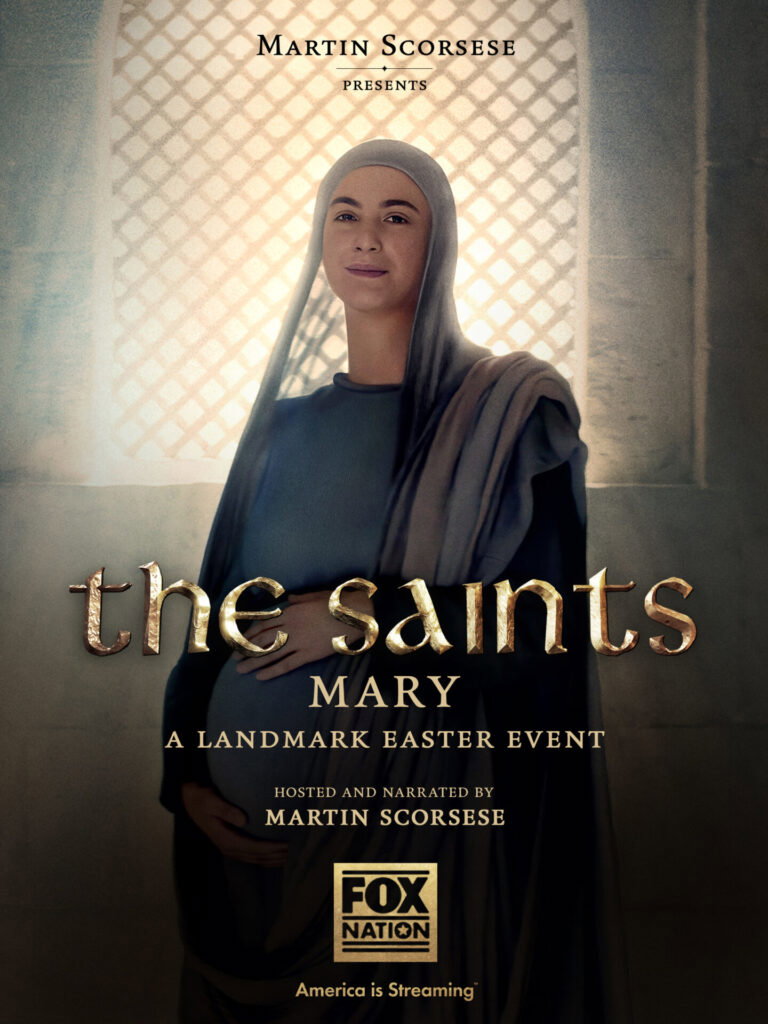
MARY is a special docudrama for Easter on Fox Nation from Martin Scorsese’s biblical series THE SAINTS, which goes through the Virgin Mary’s story from her betrothal to Joseph, her encounter with the angel Gabriel, the birth of Jesus, and other scenes from the New Testament, including the Resurrection. MARY features some impressive historical and biblical re-enactments from the life of Mary and Jesus offering an overview of their relationship and of Jesus’ ministry, but one or two of those re-enactments, and the introduction and the discussion afterwards present a Roman Catholic perspective and mention things like the immaculate or sinless conception of Mary and depict Mary’s supposed ascension directly to Heaven.
The 60-minute Easter program opens with Executive Producer Martin Scorsese saying, “This special of THE SAINTS is about the life of the Holy Mother of God, the Virgin Mary.” He says, when he grew up in the 1940s and 50s in Little Italy, Easter was “the most sacred holiday” of the year, and it still is. This, of course, rings true of Protestant denominations, the Orthodox Church, and nondenominational Christian churches. Scorsese adds that Jesus Christ’s life, death, resurrection, and teachings are “intertwined” with the life of His mother.
As the re-enactments begin, Scorsese says that Mary was born “without original sin.” He says this is the idea of the “immaculate conception” of Mary, a Roman Catholic doctrine. The re-enactments then officially begin with a ceremony of Mary’s betrothal to Joseph. At the end of the ceremony, the rabbi says they must now live apart for one year to prepare themselves for marriage.
From there, the special presents brief re-enactments of the angel Gabriel visiting Mary to announce the incarnation of the Son of God, Jesus, in her body, and Mary’s visit with her cousin Elizabeth, who was pregnant with John the Baptist. Joseph knows that Mary is not lying about what the angel Gabriel said but says it’s a hard thing to believe. Nevertheless, he tells Mary they must trust in the Lord. Later, Gabriel visits Jospeh, and he accepts the truth.
Subsequent scenes show the birth of Jesus, the Magi visiting King Herod the Great and becoming suspicious of his intentions, the Magi visiting Jesus, Mary and Jospeh and warning them about Herod, Herod’s order to his soldiers to kill all babies under two, Joseph and Mary fleeing to Egypt and returning after Herod’s death. A scene shows Joseph and the 12-year-old Jesus in Nazareth discussing God, Moses and the upcoming Festival of Passover. The family travels to Jerusalem to celebrate the festival, where Joseph and Jesus take part in the sacrifice of the Paschal lamb. When it comes time to leave Jerusalem, Joseph and Mary can’t find Jesus, and they rush back to the Temple, where they find Jesus teaching the rabbis about theology.
Jesus begins His ministry with the Wedding at Cana where, encouraged by Mary, He changes water into wine. The second half of the special portrays Jesus teaching His followers, having arguments with the Pharisees, Palm Sunday when Jesus, riding a donkey, enters Jerusalem, His crucifixion and resurrection appearances, and a scene where the resurrected Jesus visits His mother.
MARY has some impressive historical, biblical re-enactments from the life of Mary and Jesus. They offer a nice though very brief overview of their relationship and of Jesus’ ministry. The scene of the Wedding at Cana plays nicely, and the scene of Jesus confronting the Pharisees is very dramatic. The actors portraying Mary and Jesus do an excellent job. In depicting Mary, the program highlights her faith and trust in God and her love for Jesus. However, one or two of the re-enactments, and the introduction and discussion afterwards, present a Roman Catholic perspective. They mention things like the immaculate or sinless conception of Mary and depict Mary’s supposed ascension directly to Heaven.
 Add Movieguide® as preferred on Google
Share:

 - Content: +2
 - Content: +3
 - Content: +3
 - Content: +1