

"Horton the Habitat Helper"

| None | Light | Moderate | Heavy | |
|---|---|---|---|---|
| Language | ||||
| Violence | ||||
| Sex | ||||
| Nudity |
What You Need To Know:
The first three episodes of Season 2 of DR. SEUSS’S HORTON! feature clean, bright animation and a thoughtfully stylized world, showcasing a bold color palette typical of Dr. Seuss. The production quality remains high. However, the series misses some educational opportunities. It highlights biblical values such as selflessness and compassion through song and story. Parents should note some minor crude humor, including bathroom jokes and light name-calling from the antagonist, a kangaroo named Jane. Nevertheless, the episodes counterbalance this content with strong moral redemptive lessons. Because of brief action violence throughout DR. SEUSS’S HORTON!, MOVIEGUIDE® advises caution for younger children.
Content:
More Detail:
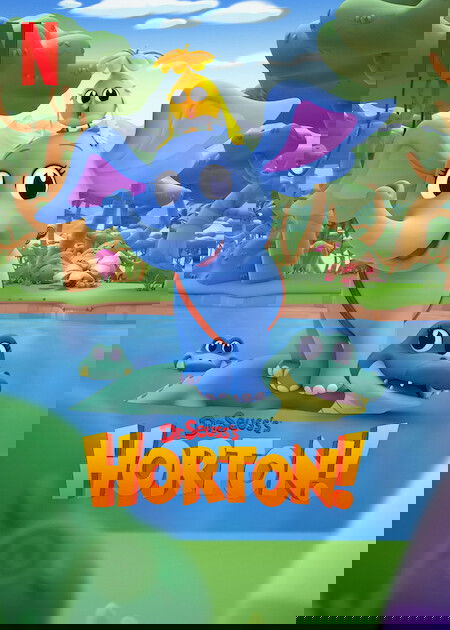
Season Two of the animated series DR. SEUSS’S HORTON! on Netflix follows a young Horton, a servant-hearted elephant, and his expressive bird pal, Samson. They travel to the ends of the jungle to help their animal friends while they ask for help themselves. This Netflix adaptation provides a wholesome program centered on social-emotional learning.
In the first three episodes of Season 2, Horton and Samson help their community while they tackle obstacles along the way. They search for baby hedgehogs scared away by thunder and embark on an adventure to replace a friend’s broken necklace.
The episodes feature clean, bright animation in a thoughtfully stylized world. It avoids capturing the impossible landscapes or exaggerated illustrations typical of Dr. Seuss while still reminding viewers of it through a bold color palette. Characters learn lessons and values through storytelling, but the show misses opportunities for academic or real-world, curriculum-based learning.
The entire show takes place in a jungle full of animals, yet it provides little animal identification. Most animals receive human names, and the main character, a bird that can’t fly, never receives identification. The show prioritizes fantasy over facts by identifying a “Yeti” monster. The music serves as a narrative progression device, but catchy songs could reinforce core values more effectively.
Though the first three episodes of Season Two of DR. SEUSS’S HORTON! never mention Jesus directly, they promote redemptive qualities. The audience learns the lesson by watching characters live it out.
The first three episodes of Season Two of DR. SEUSS’S HORTON! feature a moral worldview. They stress selflessness and servanthood while providing practical scenarios that allow conversations around themes like fear, compassion and inclusion. However, the series does include brief action violence as a plot point for most of the episodes. So, MOVIEGUIDE® advises caution for younger children.
 Add Movieguide® as preferred on Google
Share:
 - Content: +1

 - Content: +2